Felipe is rejected from birth: the priest won't baptize him, the school won't admit him, the village calls him "monster" and "devil's child." The novel shows how an entire community can condemn an innocent person for being different.
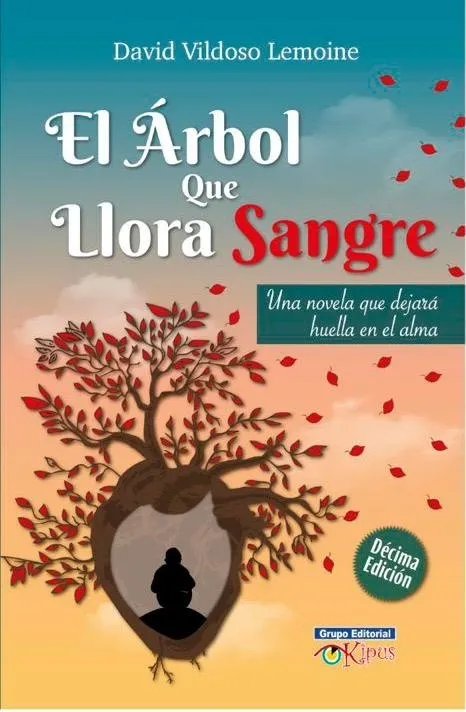
The Tree That Weeps Blood — David Vildoso Lemoine
A costumbrista novel about inclusion, human dignity, and the strength of the spirit against adversity — set in the rural heart of Chuquisaca, Bolivia.
In a small village in Chuquisaca, where silence weighs more than truth, a boy is born marked by rejection and superstition. Felipe Chambi grows up in the shadow of contempt, protected only by his grandfather's unwavering love and an ancient ceibo tree that rises on a hilltop like a guardian of his destiny.
While envy, abuse of power, and ignorance corrode the soul of the village, Felipe finds in the land, in nature, and in Amancaya's love the strength to resist. But when evil decides to impose its law, tragedy unleashes an event impossible to explain: the tree begins to weep blood.
Every red drop is memory. Every tear is justice.
And the earth never forgets.
The Tree That Weeps Blood is a profound and moving story about dignity, discrimination, love, and resistance — a novel where nature becomes the witness and voice of the innocent.
About the work
The novel explores themes of discrimination, human dignity, abuse of power, and collective memory. Through the story of Felipe Chambi, the work invites readers to reflect on the value of respect, empathy, and social justice. The narrative combines social realism with powerful symbolism embodied in the ceibo tree, which becomes the voice of memory and witness to injustice.
It is a reading that promotes dialogue, social awareness, and the strengthening of fundamental values in the holistic education of young people.
Born August 16, 1967, in San Pedro, Chuquisaca. Born with a severe facial deformity — a single eye, no external nose — he is rejected by the entire village. Raised by his grandfather, he grows noble and wise. Never develops resentment.
Village blacksmith, self-taught, informed by his portable radio. Tall, snow-white beard. Loses his parents, daughter, and wife. Dedicates his final years to raising Felipe with love, wisdom, and faith.
Don Ciprián's granddaughter. Partially blind — sees shadows and silhouettes only. Separated from her father as a child, she begged in Buenos Aires until her grandfather rescued her. She discovers something in Felipe that no one else can see.
Corregidor and landowner of San Pedro. Heavyset, rides a black horse, carries a .22 caliber rifle. Tries to seize the Chambi lands, poisons birds, and embodies the darkest aspects of the gamonal system.
One year younger than Felipe. Son of don Isauro's peons. They meet when Felipe helps him find a lost sheep. Becomes his inseparable companion.
Dark-coated German Shepherd. Accompanies Felipe on all his adventures. His role in the novel reflects the bond between animal innocence and the human condition.
Felipe is rejected from birth: the priest won't baptize him, the school won't admit him, the village calls him "monster" and "devil's child." The novel shows how an entire community can condemn an innocent person for being different.
Felipe faces rejection from birth — abandoned by his mother's family, excluded from school, shunned by the village. Throughout the novel, he endures a series of profound challenges that test his spirit. He never gives up.
Don Nicolás's love turns a rejected baby into a wise and noble young man. Amancaya's love gives Felipe the experience of being truly seen and accepted. Amancaya, who cannot see with her eyes, sees with her heart.
Felipe is a guardian of nature: he speaks to trees, protects birds, farms organically. The novel denounces deforestation, pesticide use, bird poisoning, and dynamite fishing.
Don Isauro Orías embodies the gamonal system: seizing others' land, exploiting unpaid laborers, and using his position to abuse those beneath him. No one confronts him because he controls both land and political power.
Don Nicolás, self-taught through his radio and magazines, educates Felipe at home because the formal system excludes him. The irony of the school sign that reads "Children are the future of our Nation" — at the school that rejected Felipe.
The priest rejects Felipe, but don Nicolás teaches him a direct relationship with God through nature and the Bible. Felipe "had come to know the love of God without the intervention of any person."
Felipe spends his entire life covering his face with a cap. The moments when he decides to remove it are among the most powerful in the novel.
The ceibo (also called Cuñuri or Gallo Gallito) is the central symbol of the novel. Its red flowers fall like crimson tears. It symbolizes:
Felipe represents human dignity that transcends physical appearances. The village sees a "monster," but those who know him see kindness, intelligence, and nobility.
San Pedro = human society: prejudice, rejection, exclusionary institutions (church, school), gossip, violence.
Monte Grande = natural paradise: freedom, beauty, acceptance. Felipe "flew with the birds, spoke to the trees, counted thousands of friends, from a beetle to a beautiful deer... he was free."
Felipe cannot show his face to the world; Amancaya cannot see the world's faces. Together they represent that true love does not depend on sight or appearance. Amancaya "sees" Felipe with her other senses and her heart. It is perfect complementarity.
The German Shepherd represents unconditional loyalty and nature's innocence. His presence in the novel accompanies Felipe's most important moments and reinforces the bond between humans and the natural world. Read the novel to discover how his story intertwines with the ending.
San Pedro: Fictional village about 200 km from Sucre, in Azurduy province, Chuquisaca department. Fewer than 200 inhabitants.
Monte Grande: Rural property 2 km from San Pedro, across two rivers (el Grande and el Chico). A valley surrounded by mountains. In rainy season, the rivers rise and completely isolate Monte Grande.
No electricity, running water, or telephone. Travel by horseback. Subsistence farming (potato, corn, vegetables). Endemic Chagas disease (vinchucas). Gamonal system: the corregidor/landowner controls land and people. One small school, a visiting priest once a week.
| Term | Definition | Context in the book |
|---|---|---|
| Wawa | (Quechua) Baby, small child | "We must take the wawa to be baptized" |
| Miska | (Quechua) First planting of the year | The Chambis plant miska potatoes |
| Mote | Boiled corn, Andean staple food | Don Nicolás prepares mote for the boys |
| Chicha | Fermented corn drink | Brewed for the Tata Santiago vigil |
| Surazo | Cold southern wind striking Bolivia | Travelers must endure surazos |
| Chaqueo | Slash-and-burn clearing for farming | Felipe suffers seeing the deforestation |
| Vinchuca | Insect that carries Chagas disease | They burn molle branches to repel vinchucas |
| Corregidor | Local political authority in rural Bolivia | Don Isauro is the Corregidor |
| Terrateniente | Landowner of large estates | Don Isauro is the patrón who exploits peons |
| Tata Santiago | Saint James, venerated in rural Bolivia | The Navarro family's religious vigil |
| Ceibo | Native tree (Erythrina), with intense red flowers | The central tree that "weeps blood" |
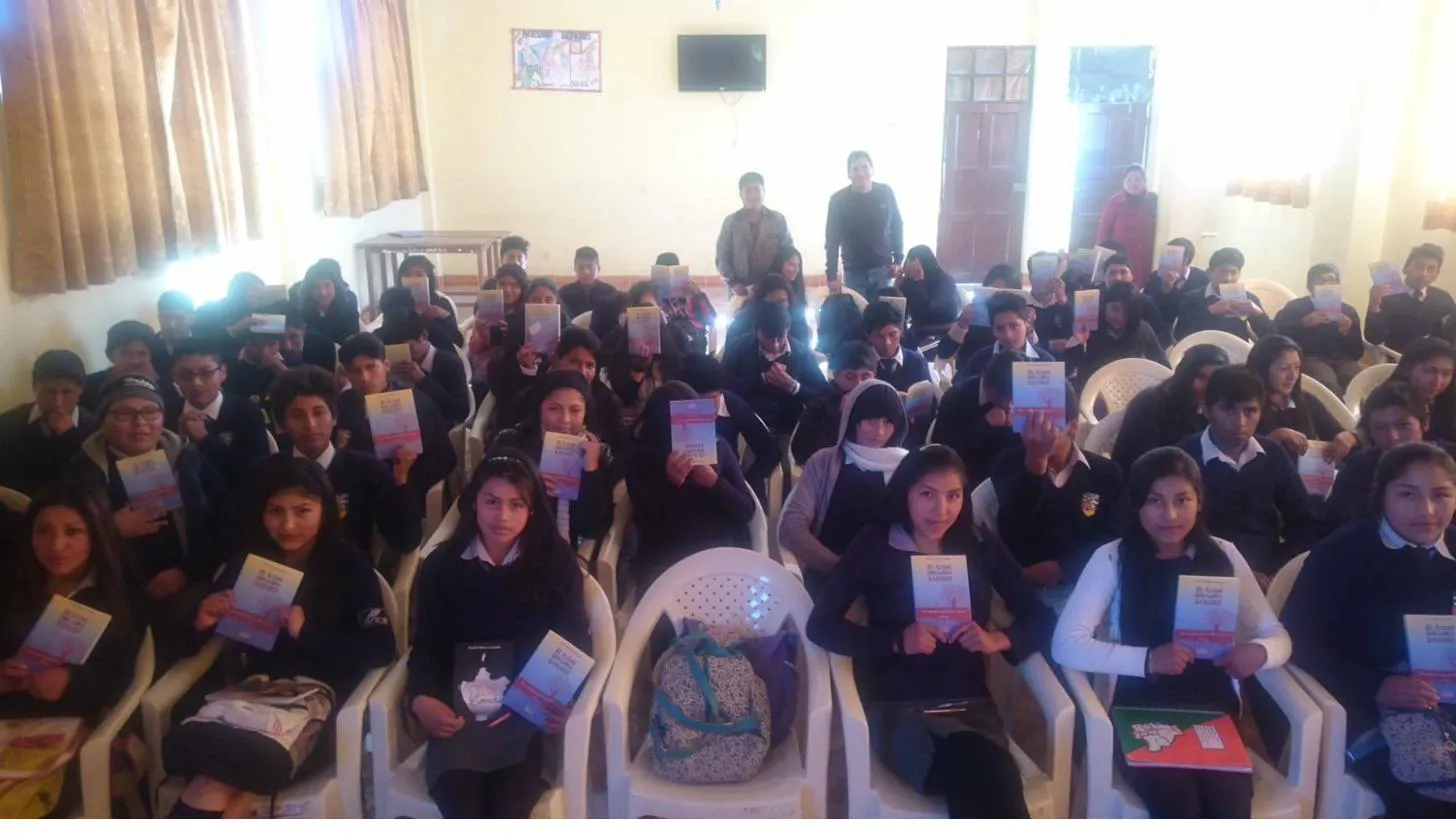
Follow the author for news and events
Follow channel (coming soon)Downloadable PDF teaching materials
Download (soon)