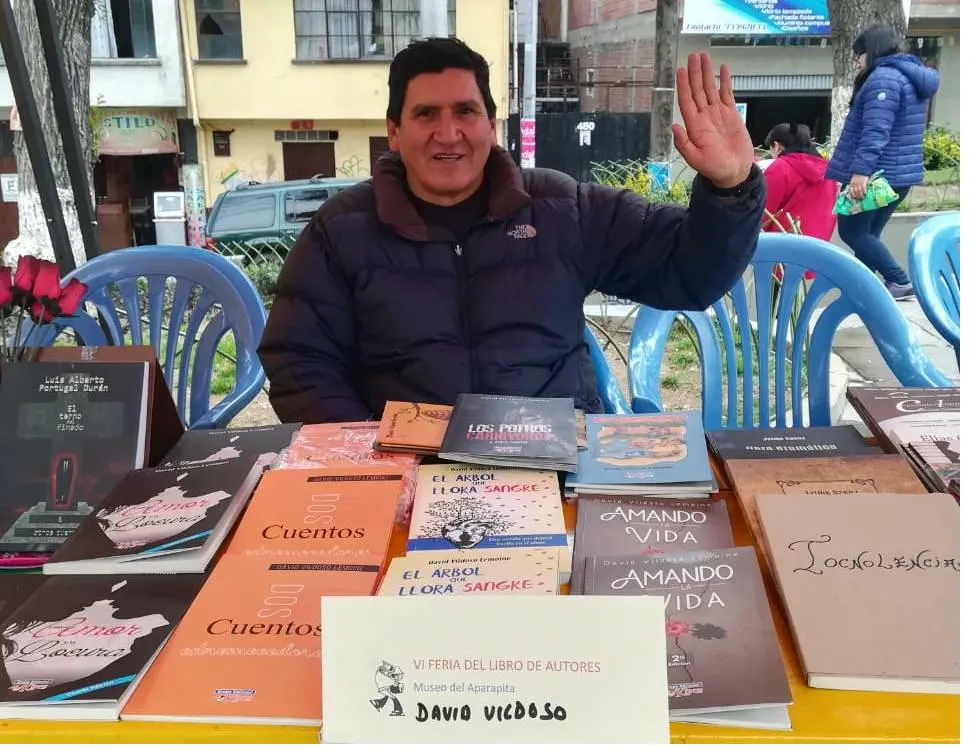
About
Agronomist by profession, writer by vocation
Agronomist by profession, writer by vocation
David Vildoso Lemoine was born in the village of San Pedro, Azurduy province in the department of Chuquisaca, Bolivia. He is an agronomist by profession, but always dreamed of becoming a writer. He owes his love of reading to a teacher who, during his early years of secondary school, had him read Les Miserables and The Count of Monte Cristo, books that opened the doors of creativity and imagination.
"I understood that life is a school; I will learn until my last breath."
«Comprendí que la vida es una escuela, aprenderé hasta mi último suspiro de vida.»
— David Vildoso Lemoine
With over a decade of literary career, David has published eleven books, most dedicated to young readers and used in hundreds of schools across Bolivia. His most recognized work, The Tree That Weeps Blood (El arbol que llora sangre), has reached its tenth edition and is considered one of the most-read books in Bolivia. The author himself describes it as "the most-read and most-pirated book in all of Bolivia."
His books address themes of deep social relevance: inclusion and children with disabilities (The Tree That Weeps Blood), the choices young people face (Between Love and Madness), and adolescent suicide prevention (Loving Life). Critics have praised his poetic language and the absence of gratuitous violence in his narratives. In 2012, Bolivia's Chamber of Deputies awarded him the "Honor al Mérito" distinction for his significant contribution to Bolivian society in forming new generations through reading, describing his work as "a tireless effort."
Beyond novels and short stories, David has published essays and chronicles in the MIRADAS magazine of the newspaper Página Siete, including Mi viaje al norte de La Paz, Una escuela en Warisata, and El Chapare y su riqueza — pieces that reflect his keen eye for Bolivian life.
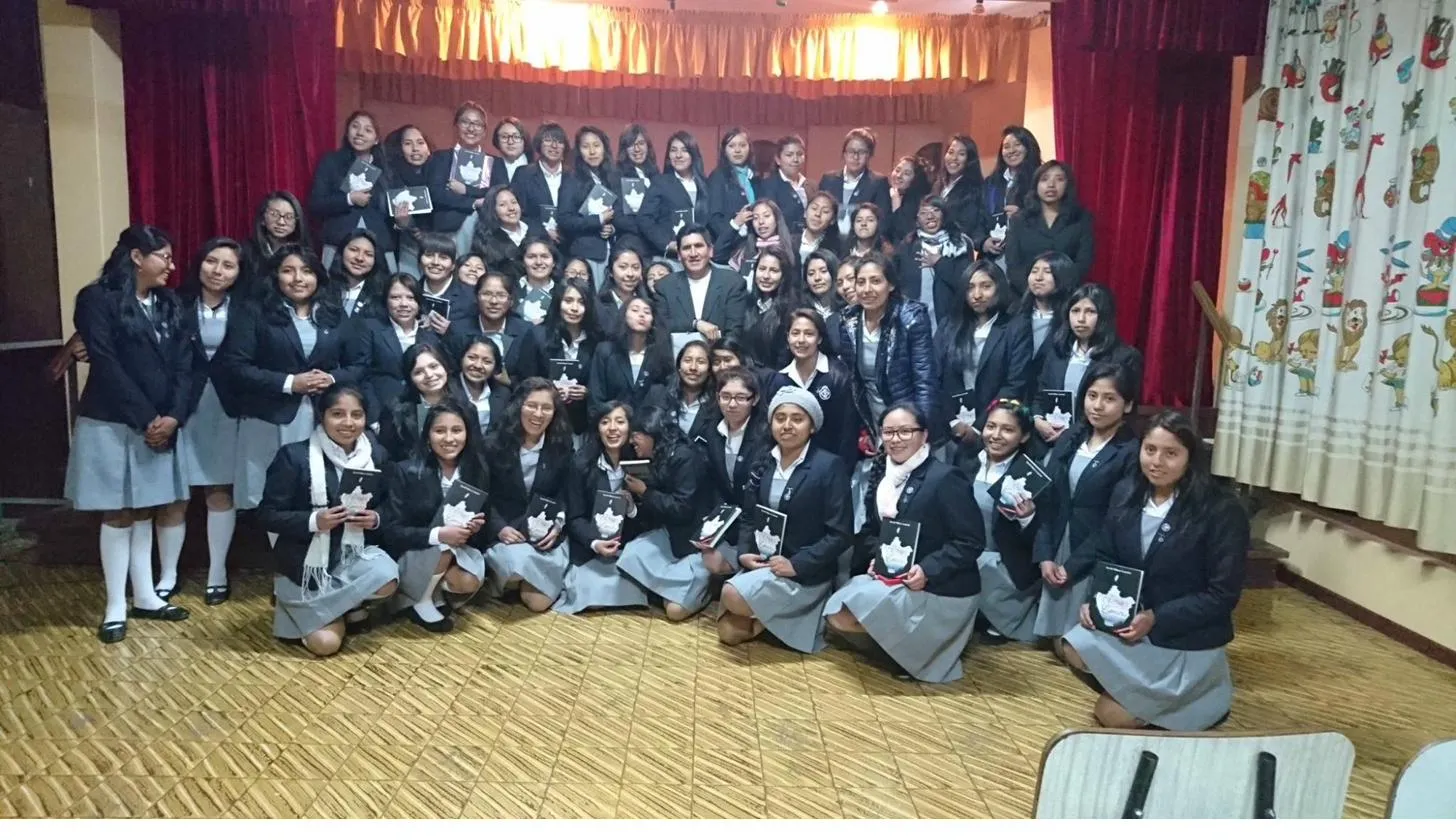 With young readers at a school visit
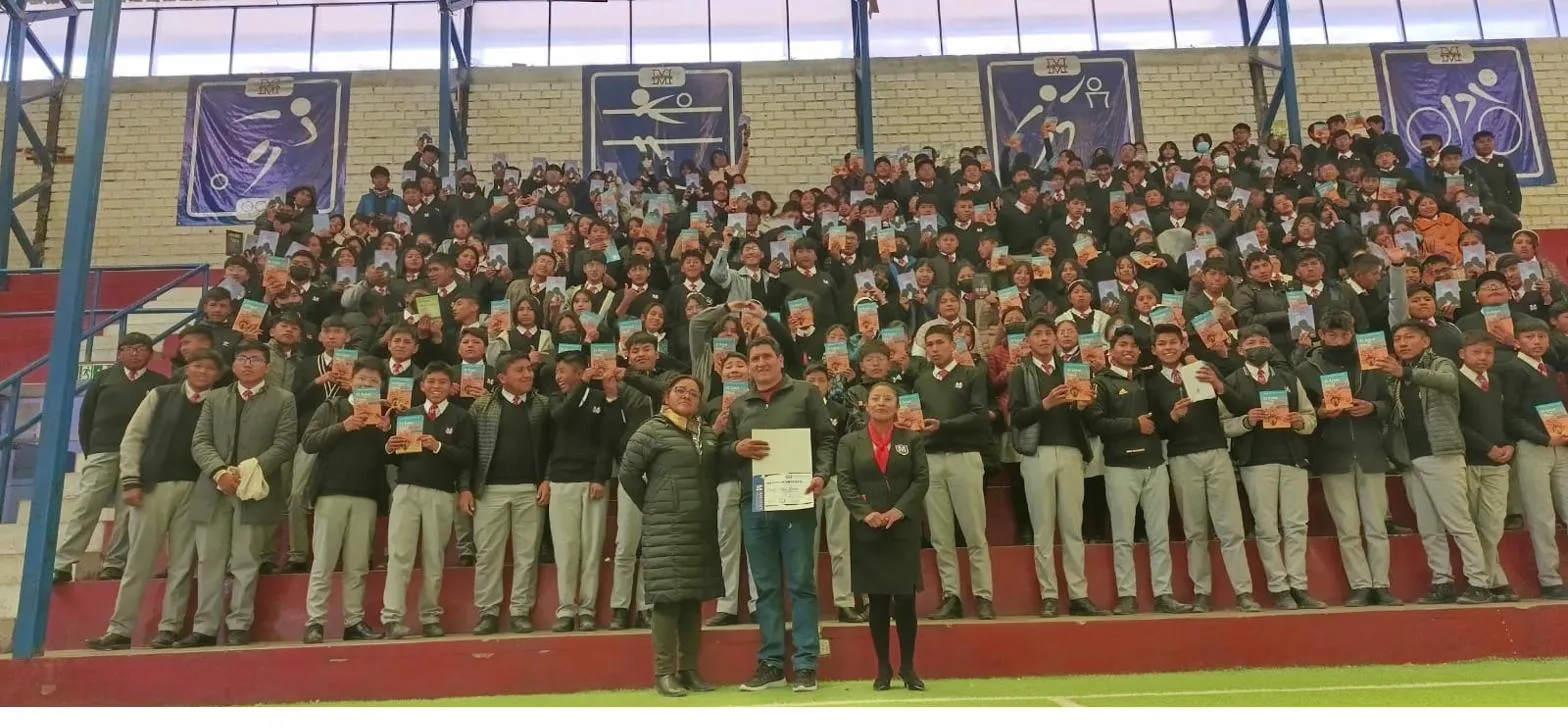 Hundreds of students reading his books
David Vildoso is President of the Bolivian Writers Association "Escribo." In May 2022, in this capacity, he signed a historic agreement with Bolivia's Ministry of Education, represented by Minister Edgar Pary Chambi. The agreement establishes that every quarter, schools across Bolivia must read at least one work by a national author — an institutional achievement promoting both literacy and Bolivian literary production.
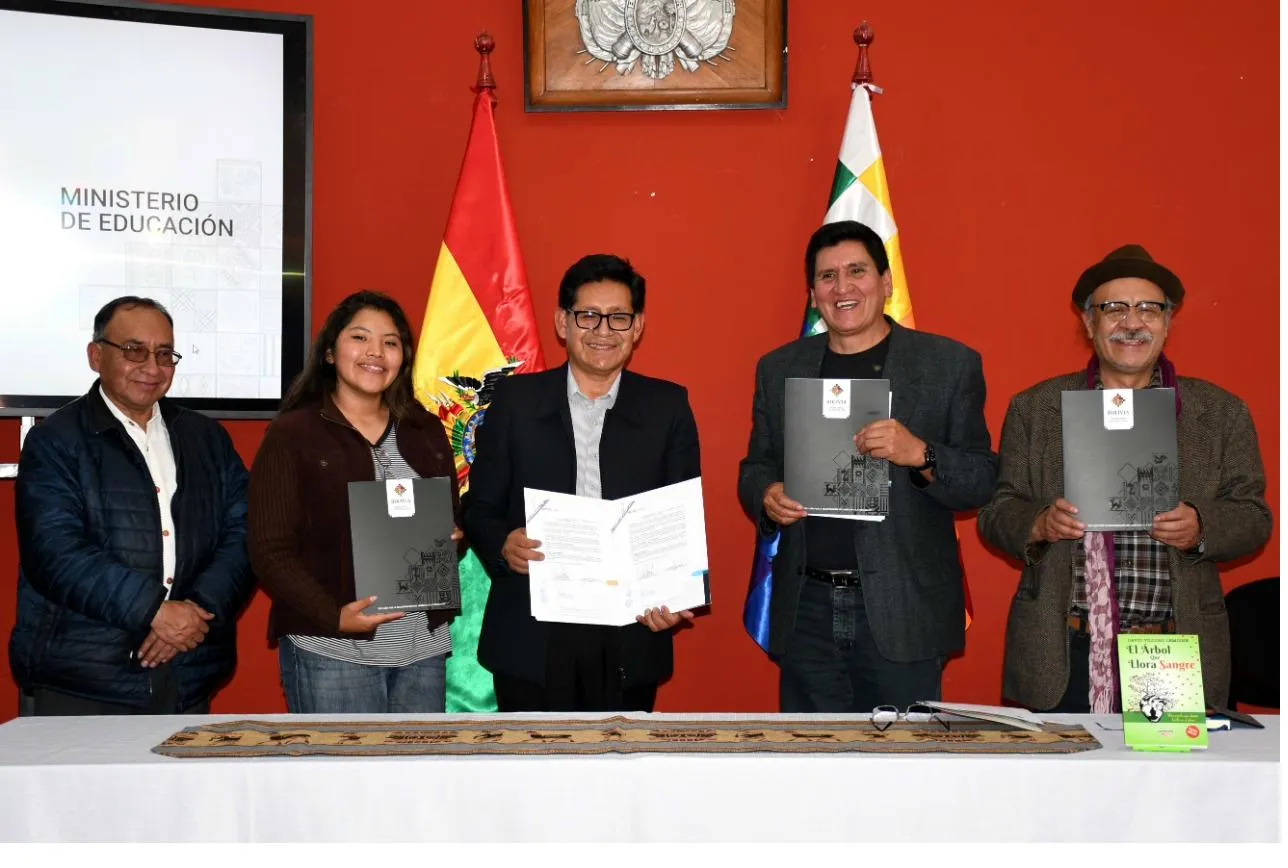 Signing the agreement with Bolivia's Ministry of Education, 2022
"Minister, you are lighting this flame with the signing of this agreement, because it is a way to motivate the reading habits of the student population and, at the same time, to motivate the production of works by Bolivian authors."
David is one of the leading organizers of the "Writers' Encounter" (Encuentro de Escritores), an initiative where Bolivian authors interact directly with young students in schools across La Paz, El Alto, and other cities. The true protagonist of these encounters is the book itself. David personally delivers his works to schools that request them and, after reading, leads debates with students to — in his words — "whet their appetite for reading."
In 2015, he was invited to the La Paz International Book Fair, where he contributed the children's story Rigucho y Pancho as an incentive to promote reading among young audiences. During the 2020 pandemic, he organized a virtual writers' fair with over 30 nationally invited authors, demonstrating cultural leadership even in times of crisis.
David Vildoso's work has transcended Bolivia's borders. His book Two Harrowing Tales (Dos cuentos estremecedores) was cataloged by Princeton University Library, one of the most important Latin American collections in the United States. The book is part of the ReCAP consortium, shared by Princeton, Columbia, Harvard, and the New York Public Library. David also has an entry in the Encyclopedia of Mexican Literature (ELEM), published by the Foundation for Mexican Letters.
"I was born where I had to be born, I had no choice; but I know I came into this world at the right time, to fulfill my purpose."
«Nací donde tenía que nacer, no tenía elección; pero sé que vine a este mundo en el tiempo correcto, para cumplir mi meta.»
— David Vildoso Lemoine
11 published works — novels, short stories, and essays. From The Tree That Weeps Blood to Loving Life.